
The Skill That Separates Good Leaders from Great Ones
Most leaders learn faster every year. The best ones also unlearn faster. That's the mindset of change, and it's a choice.

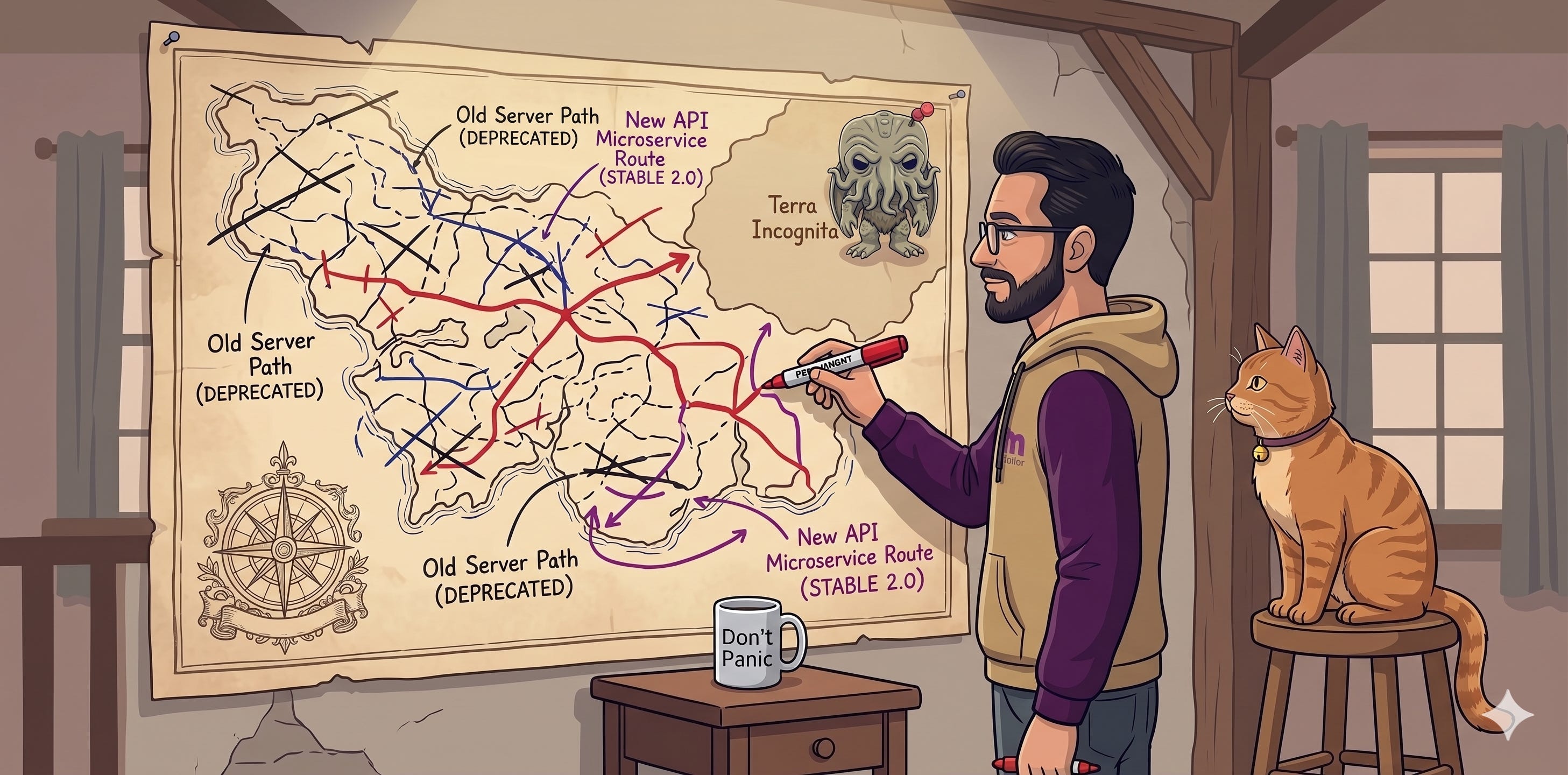
At some point in the last few years, the half-life of a useful mental model got significantly shorter.
I don’t mean this metaphorically. I mean that the frameworks that were genuinely useful for thinking about technology, organizations, and leadership in 2022 are, in many cases, either incomplete or actively misleading in 2026. The world didn’t just add new information on top of what we knew. It reorganized. The map changed shape, not just scale.
This is a specific kind of problem, and it requires a specific kind of skill. Not the ability to learn, most leaders can learn. The ability to unlearn and relearn faster than the environment is changing around you.
That’s the skill. And almost nobody is training for it deliberately.
Why This Is Harder Than It Sounds
Learning is additive. You take what you know, you add new information, you update your understanding. The cognitive load is manageable because the foundation stays intact.
Unlearning is different. It requires finding something you believe to be true, something you may have built processes, decisions, and identity around, and not just adding to it, but dismantling part of it. Replacing a load-bearing assumption with a different one, while the structure it was supporting continues to need to function.
This is genuinely uncomfortable. And the more senior you are, the more uncomfortable it tends to be, because the higher you go, the more your credibility is tied to the quality of your judgment, and the more a visible update to that judgment can feel like evidence that the judgment was bad in the first place.
It wasn’t. Judgment that was right given the information available at the time is good judgment, even if better information later makes it look wrong. But that’s a harder story to tell about yourself than “I was right all along.”
What the AI Disruption Is Actually Testing
I’ve spent a lot of this month writing about the events of the past few months. What I haven’t said explicitly is that all of it, underneath, is a test of this specific skill.
The leaders who have navigated this period well are not, in my observation, the ones who had the most information or the best analysis at the start. They’re the ones who were willing to update. Who looked at February and said: this changes something about how I think about this. Who read the manifesto and didn’t just react emotionally, but asked: what does it mean that this is now said out loud, and what do I do with that?
The leaders who struggled are, almost uniformly, the ones who applied frameworks from a previous moment to a situation that had moved past them. The ones who evaluated AI vendors the same way they’d always evaluated software. The ones who treated “responsible AI” as a compliance question rather than a strategic one. The ones who, when the landscape shifted, waited for it to shift back.
It isn’t going to shift back.
The Practice, Not the Principle
Here’s the problem with writing about learning agility, or adaptive thinking, or whatever the current vocabulary is: it’s very easy to agree with as a principle and very hard to do as a practice.
So let me try to be specific about what it actually looks like.
It looks like shortening the time between “I notice something has changed” and “I update how I act accordingly.” Most leaders notice change reasonably well. The gap is in how long it takes to translate that observation into different behavior. That gap is where the competitive advantage lives or doesn’t.
It looks like distinguishing between the things you’re updating and the things you’re holding. Not everything should change. Some things are genuinely stable: values, principles, the way you want to treat people. The skill is knowing the difference between a load-bearing assumption and a scaffolding assumption. The first, you change carefully and explicitly. The second, you change as fast as the evidence warrants.
It looks like building a personal early warning system. What are the signals that tell you your mental model might be outdated? For me, it’s when I find myself explaining something and the explanation feels mechanical like I’m reciting rather than reasoning. Or when I disagree with someone I respect, and I can’t articulate why beyond “that’s not how it works.” Those are usually signs that I’m defending a map, not navigating the territory.
And it looks like making it safe for your team to do the same thing. The individual skill is multiplied or limited by the organizational culture. Teams that punish people for changing their minds, that read visible updates as inconsistency or weakness, will always learn slower than teams where updating is treated as evidence of engagement. This is the leader’s job to model.
The Mindset of Change
There’s something underneath all of this that I keep coming back to and I’ve had a name for it for years.
It’s the ability to hold your current beliefs with confidence and looseness at the same time. Confident enough to act on them, make decisions, give direction. Loose enough that when better information arrives, you can update without it feeling like a defeat.
This sounds like a contradiction. It isn’t. It’s actually the way good scientists think: with strong hypotheses held provisionally, designed to be falsified. The strength of the belief enables decisive action. The provisionality enables honest updating.
Most leaders are trained to project certainty. The AI age is going to reward those who can project directional confidence: I know where I’m going, here’s why, and I’m open to updating the route as we learn more.
I call this the mindset of change. Not a technique, not a framework, not a tool. A way of standing in relation to the world that makes updating feel like progress rather than defeat. It’s the thread running through everything I do, and through everything I’ve written this month.
What This Month Has Been About
I started May with Palantir’s manifesto: an organization that has been exceptionally clear about what it believes and has spent years building toward it. I moved to my own quiet decision to stop using OpenAI: an update I made based on accumulated signals, without announcing it. Then to the sycophancy problem: the structural tendency of AI systems, and of most feedback environments, to tell us what we want to hear rather than what we need to. Then to what I built to work around it: two AI strategists with opposing mandates, arguing about my own company, producing findings I’d been avoiding for months. Then, on Towel Day, to Adams’s reminder that “Don’t Panic” is actually strategic advice.
All of these are, at some level, about the same thing: how do you stay oriented as a person, as a leader, as an organization, in a landscape that is reorganizing faster than any previous map can account for?
The answer isn’t to predict better. It isn’t to find a more stable foundation. It’s to get better at the practice of updating: quickly, honestly, without drama, and without losing the thread of what you’re actually trying to do.
That’s the mindset of change. The leaders who develop it are going to find this a very interesting time to be working.
The rest are going to find it exhausting.
What’s your practice for staying oriented when the landscape is shifting? I’d be curious, especially if you’ve found something that actually works.
See you in June. And thanks for reading.